

A friendly is never simply ninety minutes placed into an open date. For a professional club, it is a sporting decision with a travel plan, a player-load decision, a venue operation and a recovery window attached. The useful question is not, “Can we get a game?” It is, “What does this game need to do for the group, and can the day support that purpose?”
1. Start with the football question
Every friendly should have a clear job. The staff may want controlled minutes for players returning to the group, a test against a particular style, a rehearsal for travel and matchday routines, or a chance to apply a tactical theme under pressure. That purpose changes the right opponent, date, location, kick-off and squad plan. Without it, a fixture can consume time and energy while producing very little useful information.
Set the priority before approaching opposition. Is the aim to give a broad group minutes, build a match rhythm, prepare for a specific competitive opponent or keep a camp week moving without overloading the squad? The answer should be short enough that everyone involved can use it to make practical decisions. It keeps the conversation focused when an attractive but unsuitable opportunity appears.
The same discipline protects players. A friendly that fits the training plan can offer a valuable step forward. A friendly added because a date is available can create a late return, a disrupted recovery day and a poor preparation block before the next competitive match. The fixture has to earn its place in the week.
2. Choose opposition for the right test
Opposition is more than a name on an itinerary. Coaches need to understand what the match can reveal. A high-pressure opponent may test build-up work. A compact group can help the team rehearse patience and chance creation. A local opponent can reduce travel and allow a cleaner matchday rhythm. The right choice depends on the staff's purpose, not a generic idea of quality.
Discuss the practical match conditions at the same time: likely squad level, format, substitution approach, kick-off, venue, playing surface and any restrictions that affect the intended minutes. A strong sporting conversation becomes less useful if the team only discovers later that the venue is too far from base or the timing removes the recovery window.
Keep expectations honest. A friendly is useful precisely because it is a controlled environment, not because it perfectly replicates competition. Its value comes from asking a specific question and creating the conditions to learn from the answer.
3. Check the calendar before the detail
Dates shape everything that follows. Review the club schedule, player release periods, tournament commitments and the intended training block before treating a fixture as confirmed. The FIFA international match calendar is the relevant starting point for international-window planning, while domestic competition and association rules create their own constraints.
For an international fixture, do not assume the domestic process carries over. Authorisation requirements differ by the clubs and countries involved. The FA, for example, says an English club needs prior written consent to play a friendly outside England or against a club affiliated to another FIFA member association, unless a stated exception applies. That is not a universal checklist, but it is a good reason to confirm the applicable rules early with the relevant football authorities.
Leave room for the work around the match. A date can be technically open but still be a poor operational choice if it forces an overnight journey, prevents the desired pre-match session or interrupts the medical and recovery plan. Build the full sequence before calling the slot useful.
4. Treat the venue as part of the match plan
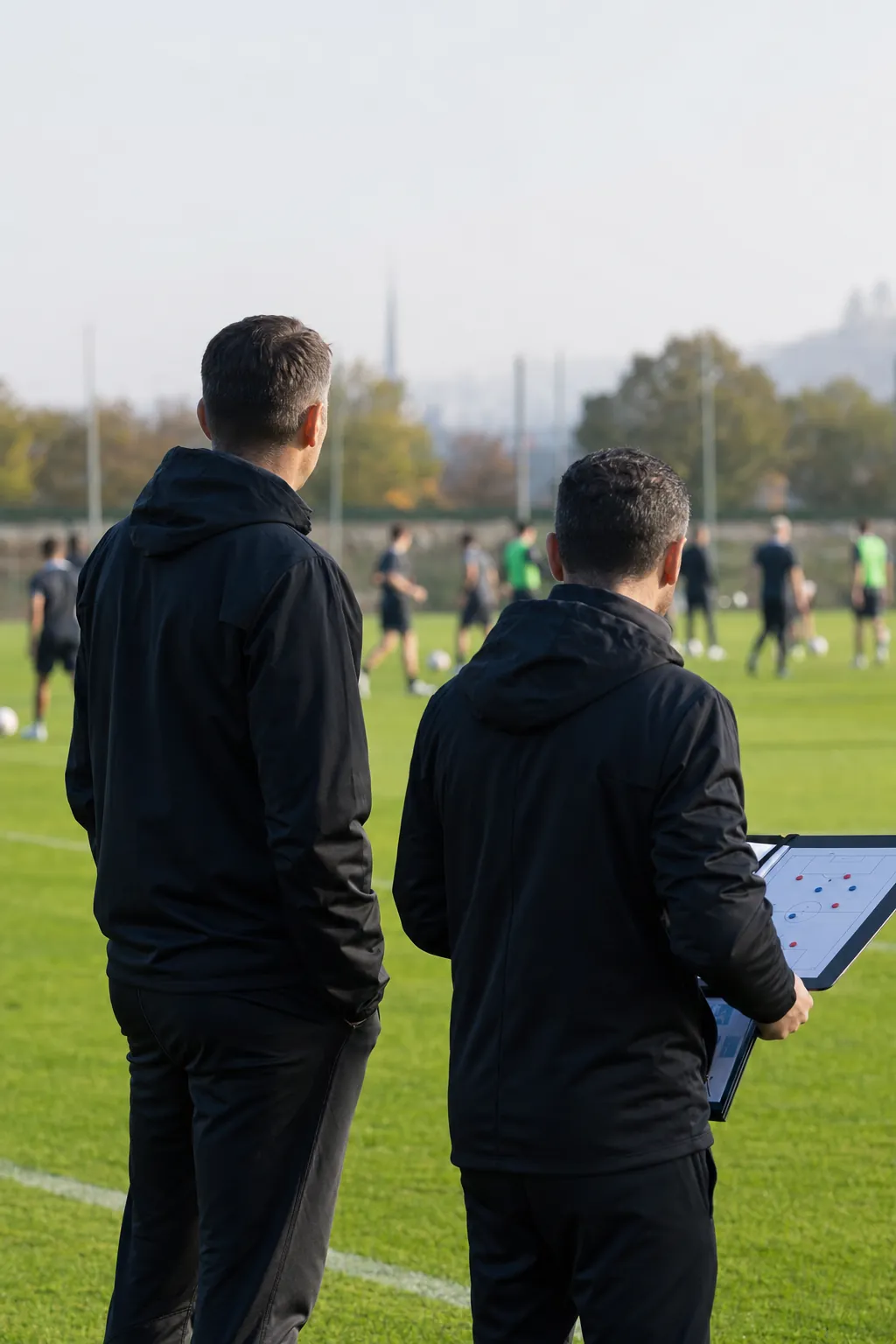
A venue should be assessed through the team day, not only the playing surface. Confirm the real arrival route, coach access, changing areas, warm-up space, staff workspace, medical provision, equipment storage, security, parking and the route back to the hotel or airport. These details determine whether the group arrives composed and prepared or spends the hour before kick-off solving avoidable problems.
Ask who has final responsibility on site and how the contact will be reached on the day. If a dressing room changes, a team coach is delayed or a warm-up area is unavailable, staff need a person who can make a decision. It sounds basic because it is basic. Yet it is often the difference between a calm operation and a loud, last-minute scramble.
Where a friendly is part of a camp, the travel between base and venue deserves special attention. A sensible distance on a map can become less sensible with loading, traffic, security and an unfamiliar route. The match should not consume the preparation and recovery the camp was meant to protect.
5. Build the team movement from the first session onward
Good match planning begins before matchday. Work backward from the warm-up: when does the group leave, when does equipment move, what is the meal plan, where do staff prepare and how is updated information shared? Then work forward from the final whistle: post-match food, treatment, media obligations where relevant, the loading sequence and the return to base. The player experience should feel simple because the complex decisions have already been made.
Equipment needs a named plan. Match kit, boots, balls, medical supplies, analysis equipment and recovery items cannot be treated as an afterthought. Identify which cases travel with the group, which go separately and who confirms that the essentials are at the correct venue before staff need them. A group should not lose warm-up time because an important bag is somewhere between the hotel and the team coach.
DFLD's football club travel work is built around these handoffs, linking the group's movement to accommodation, training access and the first useful session. A reliable matchday starts with the same principle: the operating plan should serve the football, rather than demanding attention from the football staff.
6. Make the player-minutes plan operational
The minutes plan is not only a coaching document. It affects the warm-up group, substitution communication, recovery work, transport and the next day's schedule. Make sure the people coordinating the day know the broad intent, while retaining the staff's right to adjust for what they see in the match. The goal is not to make the plan rigid. It is to prevent surprise from becoming disorganisation.
Consider the full squad. A player travelling back from an international programme, a returning player or someone managed after a recent load may need a different sequence from the main group. The practical plan should give medical, performance and coaching staff the space to make the right decision without turning the matchday into a series of improvised compromises.
After the match, the key question is what comes next. Does the group need a recovery session, a travel day, individual work or a return to collective preparation? Work backward from that answer when setting kick-off and travel choices. A good friendly supports the next competitive fixture, not merely the results page.
7. Give approvals and responsibilities a home
International friendlies can bring more regulatory and administrative layers than a standard domestic game. The right path depends on the clubs, countries, associations and competition context. FIFA notes that member associations can arrange friendly matches independently within the applicable regulations, while cross-confederation arrangements may involve a licensed match agent. Clubs should use the current rules and the relevant association guidance, not a generic online checklist, to establish what their own fixture requires.
Keep the ownership visible. One person should coordinate the football brief, one should hold the operational plan and the responsible club contacts should know who has authority to approve a material change. List the documents, deadlines and confirmations that matter. That short record is much more useful than a long chain of messages when travel is close.
For a match requiring external support, DFLD's FIFA Match Agent service helps connect the fixture to its venue, team movement, arrival, operations and post-match plan. The point is not to add a layer. It is to make sure the parts that affect the football department are held together.
8. Review the friendly while it is still useful
The best review is short and specific. Did the opponent and format answer the intended football question? Did the arrival sequence protect preparation? Were the team spaces and equipment ready? Did the minutes and recovery plan work for the group? Which detail would staff change before the next match? Capture the answers while they are still concrete.
This is not a blame exercise. It is how a team turns one-off planning into a more reliable process. A simple record of what worked, what created friction and who owns the next adjustment makes the next camp, tour or international programme calmer from the start.
How DFLD helps arrange the right friendly
DFLD works from the sporting purpose outward. For a camp, tour or standalone fixture, the opponent, venue, team movement, training rhythm and recovery plan are connected around the staff brief. That gives football departments a clearer route from the first enquiry to the final return to base.
For teams planning a friendly alongside a training block or international programme, a camp brief conversation is the practical place to begin. Start with what the match needs to do for the group, then build the day that lets it do it.
Frequently asked questions
How far ahead should a football club arrange a friendly?
Start once the sporting purpose and likely dates are credible. Early work protects suitable opposition, a workable venue and the practical details around travel, training and recovery. The exact squad and minutes plan can still be refined closer to the match.
What should a club confirm before accepting a friendly match?
Confirm the football purpose, opponent, date, kick-off time, venue, approvals, travel plan, warm-up access, equipment, staffing, post-match food and route home. The club should also know who can make a decision if a material part of the day changes.
Do international friendlies need approval?
Requirements differ by country, competition and the clubs involved. Teams should check the relevant association and competition rules early rather than assuming a domestic process applies internationally. For example, The FA sets out separate consent requirements for English clubs playing abroad or against clubs from other FIFA member associations.
How should a friendly fit into a training camp?
The match should serve the camp's football objective. Plan the opponent, kick-off, travel, player minutes and recovery around the week's training work. A fixture that looks attractive but creates an avoidable late return or lost session is rarely the right choice.
