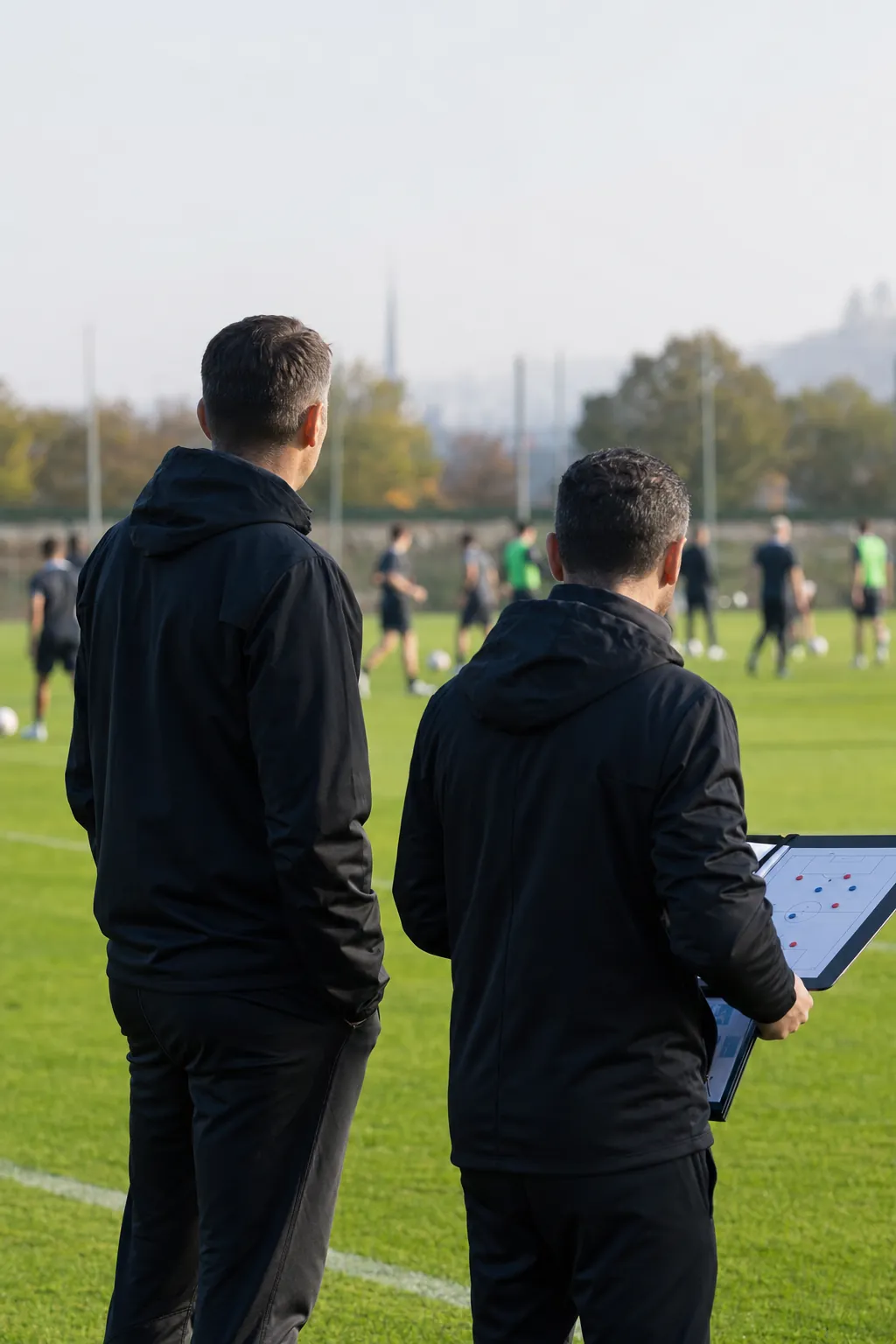
A professional soccer training camp is not selected by finding the nicest hotel or the best-looking pitch. It is chosen by asking whether the team can complete its work, day after day, without avoidable friction. The right base protects training time, keeps staff close to the group, makes recovery easier and gives the football department enough control to adapt when the plan changes.
1. Start with the football objective
Before comparing destinations, make the purpose of the camp clear. The group may need a preseason loading block, a warm-weather reset, focused tactical work, a return-to-play environment or a run of friendlies before competition. Those aims affect the right dates, pitch access, match profile, squad size and rhythm of the day. A base cannot correct an unclear football brief, but it can make a clear one much easier to deliver.
Put the priorities in order. A team training twice daily needs protected access and a short, dependable route from hotel to pitch. A group working on tactical detail needs meeting space, video support and a quiet pattern around meals and recovery. A squad with returners needs room for different individual plans. The useful question is simple: what must be better when the group leaves than when it arrived?
That answer gives every later decision a reason. It tells staff whether an extra training window matters more than a larger hotel, whether a friendly is useful, and where the team can accept a compromise. DFLD's planning approach begins with the same order: define the football need, then build the environment around it.
2. Assess the base as a complete working environment
Teams do not experience a camp as separate hotel, transport and training bookings. They experience one working day. The best base lets the group move predictably between waking, meals, treatment, meetings, training, recovery and downtime. A small inconsistency in each part can turn into a large loss of attention by the third or fourth day.
Map a normal day before committing. Where do staff prepare before training? How long is the real transfer once bags, traffic and security are included? Can treatment, gym work and video fit around the pitch times? Is the team able to eat together at useful times? Where are equipment cases stored, and who can respond if a session moves? This is more revealing than a brochure because it tests the handoffs that decide whether the camp feels calm or improvised.
FIFA's Team Base Camp planning for the World Cup describes these sites as the place where teams train, rest and prepare between matches. The same principle matters for any serious camp: accommodation and training infrastructure have to support the entire program, not compete with it.

3. Verify training access, not just pitch quality
A strong surface is essential, but a professional soccer training camp needs more than a good photograph of grass. Confirm the number of pitches, the exact available windows, goals and equipment, changing facilities, staff work areas, privacy and the ability to adjust if the schedule changes. A venue that looks excellent at midday may still be the wrong answer if the team cannot use it at the times the coaches need.
The IFAB field-of-play standards are a useful reference for the dimensions and markings expected in the game. For a camp, staff should go further: test whether the ground works for the planned exercises, the number of players, the weather conditions and any match preparation. If the group needs a second session, a controlled friendly or individual work, that access needs to be real rather than an informal promise.
Ask who confirms the pitch every day and what happens when weather, maintenance or another user affects the plan. A clear answer does not mean every change can be avoided. It means the team knows who owns the next decision and how the football plan will be protected.
4. Protect the first session through the travel plan
The first good training session is a useful test of whether a base has been chosen well. It depends on arrival timing, room access, the first meal, equipment movement, local transport, staff preparation and the recovery opportunity before the group reaches the pitch. A flight itinerary that looks efficient can still be poor if it delivers people and essential equipment too late for the team to settle properly.
Build the arrival sequence backwards from that first session. Confirm which cases travel with the group, which need separate handling, where they are stored, who meets the party and how staff receive live information if a flight moves. Leave a sensible buffer for the parts that commonly change. This does not require a rigid, over-engineered schedule. It requires an operating plan that makes the important handoffs visible.
For teams travelling further afield, DFLD's football club travel work connects the group movement with accommodation, training access and the first day on the ground. The point is to keep coaches and performance staff focused on the group, rather than having them spend the first hours of a camp chasing logistics.

5. Choose accommodation for the team day
A suitable team hotel is a working part of the camp, not an indulgence. Players need consistent meals, rest and straightforward access to the staff. Coaches need a usable meeting rhythm. Medical and performance staff need enough space to work. The group also needs privacy, so every meal, lift ride and transfer does not become a distraction.
Ask practical questions. Can meal times move after a late return? Is there a room for meetings and video? Are treatment, laundry, equipment and loading arrangements workable? Does the hotel understand the difference between a leisure group and a professional football squad? The answer is not always the most luxurious property. It is the place that supports the team's habits without adding unnecessary decisions to the day.
Distance matters here. A slightly better room product is rarely worth a long or unpredictable transfer that cuts into staff preparation, player downtime or post-training recovery. The hotel and training base should be assessed as one connected environment.
6. Use friendlies to serve the camp
A friendly match should answer a football question. It may give the staff controlled minutes, test a structure, prepare the group for a particular style of opponent or move returning players toward competition. Its value comes from the fit between opponent, timing, venue, travel and recovery, not from simply adding a game to the itinerary.
Set the match purpose first, then assess the practicalities: opponent profile, kick-off time, warm-up area, team arrival, staff access, equipment, post-match food and route back to base. DFLD's FIFA Match Agent service treats a fixture as part of the wider program because the match is never only ninety minutes. It changes the work before and after it.
When the camp falls around an international window, use the FIFA international match calendar as a shared reference point. It helps staff frame the available dates, but the camp still needs a local plan that works for the players, travel demands and the next club commitment.
7. Compare options on operational clarity
Price belongs in the decision, but it should not be the only comparison. A lower figure can conceal an unconfirmed training window, shared transport, unclear equipment handling or a lack of on-site responsibility. Ask each option to separate what is confirmed, what is included, what is assumed and who owns a change once the group is travelling.
A concise operating outline is more useful than broad assurances. It should show the daily movements, named contacts, training access, hotel setup, match arrangements and escalation path. Include football, operations, medical and equipment staff in the final review. Each will spot a different practical risk, and the result is a base selected for the reality of the work rather than the appeal of one component.
DFLD plans professional football training camps around that whole picture. Florida, Europe and wider international options are assessed against the team's objective, daily rhythm, travel profile, recovery needs and match requirements. That gives the football department a clearer route from the first brief to the final day on the ground.
8. Use a final base-selection checklist
Before the team confirms a base, reduce the decision to the few questions that affect the work most. Can the group train at the required times on the required surfaces? Can the hotel, meeting space, treatment and recovery support the daily rhythm? Are the transfers short and dependable? Does the equipment plan protect the first session? Can a suitable friendly fit the football objective without disturbing the week? Is there one operational lead who can resolve a change quickly?
Write down the answer to each question for every option, including where the answer is uncertain. That is more useful than giving every venue a general score. It makes tradeoffs visible. A base may be excellent for a one-session-a-day midseason reset but wrong for a preseason group that needs two pitch windows, staff work space and controlled fixtures. The right choice is the one whose strengths match the purpose of this camp.
Finally, test the plan against an ordinary difficult day: a delayed arrival, a moved training window, a longer treatment block or a late return from a match. The team does not need a perfect answer to every possibility. It needs a base and operating partner that can respond without losing the whole day. That resilience is often the difference between a camp that looks strong in planning and one that works when the group is actually on the ground.
Use the same checklist during the final site conversation. A good answer should be specific enough to show that the provider knows the facility and the route between its moving parts. “We can arrange it” is less useful than a clear account of the training windows, the transfer, the staff spaces, the equipment route and the person who can make a change. The aim is not to turn the review into a negotiation over every minute. It is to confirm that the base can support the important moments of the day.
Keep a short record of the final decision and the reasons behind it. When the group returns, compare the experience with the original brief. Did the base protect the first session? Did the match plan serve the training work? Did the hotel and transport make recovery easier? That review helps the staff refine the next camp and builds a practical reference that is more valuable than a folder of venue brochures.
How DFLD helps teams choose the right camp
DFLD works from the sporting brief outward. Dates, training purpose, squad needs and the level of opposition shape the destination, daily schedule and operating plan. Training access, accommodation, ground transport, friendlies, equipment movement and on-site delivery stay connected, so the team can focus on the work.
For a Florida base, a European program or a wider international tour, a camp brief conversation is the practical place to start. Bring the football objective and the non-negotiables. The details can then be developed in the right order.
Frequently asked questions
What makes a professional soccer training camp different?
A professional camp is built around the team's sporting objective and daily rhythm. Pitch access, accommodation, recovery, transport, equipment, staff working space and friendly matches need to work together, rather than being a list of separate reservations.
How early should a team choose a training-camp base?
Start as soon as the likely dates and football purpose are credible. The best bases, useful training windows and suitable match options become harder to secure close to departure, while the detailed daily plan can be refined as the squad picture develops.
Should the hotel and training facility be close together?
Usually, yes. Short, dependable transfers protect treatment, staff preparation, player downtime and the recovery window after training. The strongest choice is the combination that keeps the team day calm, not simply the hotel or pitch that looks best in isolation.
How should friendlies fit into a training camp?
A friendly should answer a football question, such as giving players controlled minutes or testing a tactical theme. The opponent, venue, kick-off, arrival route and recovery plan should serve the week's work rather than interrupt it.